How to Choose Diamond Cut Quality: GIA Grades Explained (2026)
GIA only grades cut on round brilliant diamonds; we decode merchant terms like Super Ideal and 8X and show live price deltas between cut grades today.
We independently evaluate every product. Some links are affiliate links -- if you purchase through them, we earn a small commission at no extra cost to you. Full disclosure
Key facts
| Products compared | 5 buying-guides products |
|---|---|
| Price range | $558 to $3090 |
| Top pick | GIA 1.02 Carat, I Color, SI1 Clarity, Excellent Cut Round Natural Diamond (Blue Nile, $2,017) |
| Best value | Classic Four Prong Petite Comfort Fit Solitaire Engagement Ring ($558) |
| Last updated | ; prices and availability checked September 5, 2026 |
| Sources | Manufacturer spec sheets and Amazon product listings for each item, linked in the detailed reviews below; ratings are the listing's verified-purchase average at the check date. |
Our Top Picks
Quick recommendations if you're in a hurry
GIA 1.02 Carat, I Color, SI1 Clarity, Excellent Cut Round Natural Diamond
Blue Nile · $2,017
isolating the price effect of cut grade alone
See price at Blue Nile1.00 ct. Round Natural Diamond, F Color, VS2 Clarity, Super Ideal Cut
Brilliant Earth · $3,090
buyers who want a merchant's top marketed cut tier
See price at Brilliant EarthClassic Four Prong Petite Comfort Fit Solitaire Engagement Ring
With Clarity · $558
buyers assembling a ring around a specific cut-grade stone
See price at With ClarityWhen you’re zeroing in on the sparkle that matters most, the cut grade is the single factor that can turn a decent stone into a show-stopper, or leave you paying a premium for a visual that falls flat. In 2026 the industry still talks in two languages: the GIA’s straightforward Excellent-to-Poor scale that applies only to standard round brilliant diamonds, and a slew of merchant-crafted labels like “Super Ideal” or “8X” that sit outside the GIA system. By comparing two identical 1.02 ct round diamonds that differ only in GIA cut (Excellent vs. Very Good) we see a surprising price reversal, and we also map where “Super Ideal” and “8X” fit into the hierarchy. The bottom line: a GIA Excellent cut remains the benchmark for round brilliants, but you must read the fine print on marketing terms and consider how setting choices amplify, or mask, cut differences.
How we chose the stones
Our selection process was built around three non-negotiable criteria: (1) the diamond must carry a GIA grading report so the cut grade is verified by the industry’s gold standard; (2) the stone must be a standard round brilliant, because GIA’s cut grades are defined only for that shape , the GIA itself notes that “GIA cut grades run Excellent to Poor and apply only to standard round brilliant diamonds” GIA; (3) we needed a direct, side-by-side price comparison where every other 4C is identical, allowing us to isolate the cut-grade effect. Blue Nile’s searchable inventory let us pull a 1.02 ct, I-color, SI1-clarity pair that meets these rules, with the Excellent stone listed at $2,017 and the Very Good stone at $2,125 on 2026-09-05. We verified each price on the product page, captured the specifications, and then added three complementary items, a merchant-branded “Super Ideal” round, a budget-friendly solitaire setting, and a popular hidden-halo setting, to illustrate how cut terminology, pricing, and design choices intersect in a real-world purchase.
GIA 1.02 ct I-SI1 Excellent Cut Round Natural Diamond (Blue Nile)
What it is - This is a 1.02 carat round brilliant that carries a GIA certificate declaring an Excellent cut, the highest rating on the GIA scale for round stones. The stone is I-color and SI1 clarity, placing it squarely in the “good value” tier for color and clarity while letting the cut do the heavy lifting for brilliance.
Who it’s for - Buyers who want the purest possible sparkle without paying for higher-color or higher-clarity upgrades will gravitate toward this stone. Because the cut is the top GIA rating, the diamond maximizes light return, fire, and scintillation, which is especially important when the stone will be set in a simple solitaire or a halo that showcases the center gem.
What we would change - The only practical limitation is that the stone is sold loose, meaning you must purchase a setting separately. Pairing it with a setting that has a low profile (such as the With Clarity classic four-prong solitaire) preserves the visual impact of the Excellent cut without adding unnecessary metal that could distract from the stone’s performance.
Pros - GIA-verified Excellent cut at the same carat, color, and clarity as the Very Good comparison stone, guaranteeing the highest light performance within the GIA framework.
Cons - Loose stone; setting must be bought separately, which adds an extra step to the buying process.
Best for - Isolating the price effect of cut grade alone; this stone serves as the “higher-cut-grade half” of a controlled comparison pair.
Verdict - On 2026-09-05 the GIA Excellent stone was priced at $2,017, underscoring that the top GIA cut can be the more affordable option when inventory conditions align.
GIA 1.02 ct I-SI1 Very Good Cut Round Natural Diamond (Blue Nile)
What it is - Identical in every measurable way to the Excellent stone above, same 1.02 carat weight, I-color, SI1 clarity, but graded Very Good by GIA. Very Good is the next tier down on the GIA scale and still delivers strong brilliance, though it falls short of the light performance of an Excellent cut.
Who it’s for - Shoppers who prioritize a slightly larger visual footprint (because Very Good stones can sometimes be cut slightly deeper) or who are less sensitive to the subtle differences in fire may find this stone acceptable, especially if they are pairing it with a setting that adds extra sparkle, such as a halo.
What we would change - To compensate for the cut downgrade, a setting that enhances the stone’s appearance, like the Petite Hidden Halo Solitaire Plus, can help mask any marginal loss in brilliance.
Pros - Same carat, color, and clarity as the Excellent stone, allowing a clean price-to-cut comparison.
Cons - Very Good rather than Excellent cut; also sold loose, requiring a separate setting purchase.
Best for - Comparing cut-grade pricing at identical specs; it demonstrates that cut price is not a linear premium because “inventory and other factors move price too,” as shown by the Very Good stone’s higher price of $2,125 on 2026-09-05.
Verdict - The Very Good stone’s price being higher than the Excellent counterpart illustrates that market dynamics, stock levels, retailer pricing strategies, and demand, can outweigh the expected cut-grade premium.
1.00 ct F-VS2 Super Ideal Cut Round Natural Diamond (Brilliant Earth)
What it is - A 1.00 carat round brilliant marketed by Brilliant Earth as Super Ideal cut. The stone’s specifications list F-color and VS2 clarity, both a step up from the I-SI1 stones above. “Super Ideal” is a merchant-created label that sits above GIA’s Excellent grade in Brilliant Earth’s internal hierarchy, but it is not an official GIA cut grade.
Who it’s for - Consumers who are drawn to the premium-sounding “Super Ideal” branding and who also want a higher color (F) and clarity (VS2) than the baseline I-SI1 stones. This audience often trusts the retailer’s cut tier as a shortcut to the “best possible” round.
What we would change - Because the cut label is not GIA-verified, a savvy buyer might request the GIA report (or an equivalent independent report) to confirm that the stone’s proportions truly deliver the light performance implied by “Super Ideal.”
Pros - Brilliant Earth’s top-tier marketing cut tier, positioned above GIA Excellent in the retailer’s own language; higher color and clarity add visual value.
Cons - “Super Ideal” is a merchant term, not a GIA grade, so the claim is not directly comparable to the GIA Excellent/Very Good stones.
Best for - Buyers who want a merchant’s top marketed cut tier and are comfortable relying on the retailer’s grading language.
Verdict - This stone illustrates how merchant-specific cut branding sits above GIA’s own scale, but without an independent GIA cut grade the comparison remains qualitative rather than strictly quantitative.
Classic Four Prong Petite Comfort Fit Solitaire Engagement Ring (With Clarity)
What it is - A low-cost solitaire setting featuring a classic four-prong design, listed at $558 (regular price $620) on 2026-09-05. The ring is sold without a center stone, giving shoppers the flexibility to pair it with any of the graded diamonds above.
Who it’s for - Budget-conscious buyers who want a timeless setting that lets the diamond’s cut take center stage. The minimalist prong style showcases the stone’s brilliance without competing visual elements.
What we would change - If the buyer selects a stone with a higher color or clarity (e.g., the Super Ideal F-VS2), they may consider upgrading the metal (e.g., to 14 K white gold) for a more cohesive luxury feel, though the setting’s design remains appropriate for any cut grade.
Pros - Inexpensive, neutral design that does not interfere with the diamond’s performance; perfect for isolating the cut-grade impact on overall cost.
Cons - Center stone must be purchased separately, adding an extra step to the buying journey.
Best for - Buyers assembling a ring around a specific cut-grade stone, especially when testing the price impact of cut alone.
Verdict - A neutral, inexpensive setting that ensures the cut-grade choice above drives the budget, rather than the setting itself.
Petite Hidden Halo Solitaire Plus Diamond Engagement Ring (Blue Nile)
What it is - A petite hidden-halo solitaire setting crafted in 14 K yellow gold, priced at $941 (regular $1,255, 25 % off on 2026-09-05). Like the With Clarity ring, it is sold without a center stone, but its hidden halo adds visual bulk around the diamond, making the center appear larger.
Who it’s for - Shoppers who want a bit of extra sparkle and perceived size without moving to a larger carat weight. The hidden halo works well with both Excellent and Very Good cuts, as the surrounding micro-diamonds reflect light and can soften any subtle differences in the central stone’s cut performance.
What we would change - Pair this setting with the GIA Excellent stone for the purest light performance, or with the Very Good stone if the buyer prefers the halo’s visual amplification over the marginal loss in cut brilliance.
Pros - Hidden halo adds visual size regardless of the center stone’s cut grade; popular design that appeals to a broad audience.
Cons - Setting only; the buyer must still source a center diamond.
Best for - Buyers who want a hidden-halo look at any cut-grade budget, especially when the halo can help mask a lower cut grade.
Verdict - A second setting option that demonstrates how design choices can influence perceived brilliance and size, sometimes outweighing the technical cut grade.
Comparison: Excellent vs. Very Good vs. Merchant Terms
When you strip away color, clarity, and carat weight, the cut grade becomes the decisive factor for brilliance. Our side-by-side test of two 1.02 ct round diamonds shows the Excellent stone at $2,017 and the Very Good stone at $2,125 on the same day (2026-09-05). The price reversal defies the simplistic notion that “better cut = higher price.” Retail inventory, demand spikes, and even the retailer’s pricing algorithm can cause a lower-graded stone to sit at a premium.
Merchant branding adds another layer. Brilliant Earth’s “Super Ideal” label sits above GIA Excellent in the retailer’s marketing hierarchy, but because it is not a GIA grade, the claim cannot be directly measured against the GIA scale. Similarly, GCAL’s “8X” cut grade is marketed as superior to GIA’s “Triple Excellent” and is often paired with Hearts & Arrows imaging , a visual pattern that many consumers associate with top-tier brilliance , yet it remains a proprietary label outside the GIA system GCAL.
The key takeaway is that a GIA Excellent cut remains the most reliable, third-party-verified indicator of maximum light performance for round brilliants. Merchant terms can signal a stone that meets or exceeds those standards, but they require the buyer to trust the retailer’s internal grading methodology. When a retailer like Blue Nile offers a Very Good stone at a higher price than an Excellent stone, the buyer should investigate inventory factors, promotional timing, and any additional services (e.g., free certification, extended warranties) that might be influencing the price.
Buyer Questions Answered
What is the difference between Excellent and Ideal cut?
GIA’s official scale stops at Excellent; the term Ideal is not part of the GIA grading language for round brilliants. “Ideal” is a marketing shorthand used by many retailers to describe a stone that meets very tight proportion criteria, often aligning with the upper end of GIA’s Excellent range. Because “Ideal” is not a GIA-issued grade, its meaning can vary between sellers. In practice, a GIA-certified Excellent cut already meets the stringent proportions that most “Ideal” labels promise, making it the safest benchmark for maximum brilliance.
Is “Super Ideal” or “8X” better than GIA Excellent?
Both “Super Ideal” (Brilliant Earth) and “8X” (GCAL) are merchant-created descriptors that sit above GIA’s Excellent in the respective retailer’s internal hierarchy. They are not recognized by GIA, so there is no universal, third-party verification of the cut quality. “Super Ideal” suggests the stone’s proportions are tighter than a typical Excellent, while “8X” claims to surpass GIA’s “Triple Excellent” and often includes Hearts & Arrows imaging. For a buyer who wants an independent, industry-wide standard, the GIA Excellent grade remains the most trustworthy. If you choose a merchant label, request the retailer’s detailed proportion report and compare it to GIA’s criteria to ensure the claim is substantive.
Does GIA grade the cut of fancy-shaped diamonds like ovals and cushions?
No. GIA’s cut grading applies only to standard round brilliant diamonds , the shape for which the cut scale (Excellent, Very Good, Good, Fair, Poor) was developed GIA. Fancy shapes such as ovals, cushions, pears, and marquises are evaluated using different criteria (often focusing on symmetry, polish, and overall appearance) but do not receive a GIA cut grade on the same scale. If you are considering a fancy shape, you’ll need to rely on other quality indicators, such as the stone’s symmetry and polish grades, or look to alternative grading labs that provide a dedicated cut assessment for those shapes.
What We Would Buy
If we had to assemble a complete engagement ring that balances verified brilliance, transparent pricing, and visual impact, the combination would be:
-
Center stone: The GIA 1.02 ct I-SI1 Excellent Cut round from Blue Nile at $2,017. Its GIA-verified Excellent grade guarantees the highest light performance within the round-brilliant category, and the price is the lower of the two comparable stones, demonstrating that the top cut can be cost-effective when inventory aligns.
-
Setting: The Classic Four Prong Petite Comfort Fit Solitaire from With Clarity at $558. Its minimalist design showcases the stone’s brilliance without competing visual elements, allowing the Excellent cut to shine as the focal point.
-
Optional visual boost: If the buyer prefers a slightly larger perceived size, swapping the With Clarity setting for the Petite Hidden Halo Solitaire Plus from Blue Nile at $941 adds a halo of micro-diamonds that amplifies sparkle while still preserving the Excellent cut’s performance.
This pairing delivers a GIA-certified top-grade cut, a setting that respects the stone’s optical strengths, and a total price that stays within a mid-range budget for a 1 ct-class round brilliant. It also avoids reliance on merchant-only cut labels, ensuring that the buyer’s investment is anchored in an industry-wide standard rather than a proprietary marketing term.
Detailed Reviews
GIA 1.02 Carat, I Color, SI1 Clarity, Excellent Cut Round Natural Diamond
Blue Nile · $2,017
isolating the price effect of cut grade alone
What We Like
- GIA Excellent cut at the same carat/color/clarity as the Very Good comparison stone
- Price verified on the product page on 2026-09-05
Could Be Better
- Loose stone; setting purchased separately
Key Specs
The higher-cut-grade half of a same-spec comparison pair.
See price at Blue NileGIA 1.02 Carat, I Color, SI1 Clarity, Very Good Cut Round Natural Diamond
Blue Nile · $2,125
comparing cut-grade pricing at identical specs
What We Like
- Same carat/color/clarity as the Excellent pick above, priced independently
- Price verified on the product page on 2026-09-05
Could Be Better
- Very Good rather than Excellent cut
- Loose stone; setting purchased separately
Key Specs
On 2026-09-05 this Very Good stone was priced higher than the Excellent stone above, showing cut price is not always a simple premium — inventory and other factors move price too.
See price at Blue Nile1.00 ct. Round Natural Diamond, F Color, VS2 Clarity, Super Ideal Cut
Brilliant Earth · $3,090
buyers who want a merchant's top marketed cut tier
What We Like
- Brilliant Earth's 'Super Ideal' marketing cut tier, above GIA Excellent
- Price verified on the product page on 2026-09-05
Could Be Better
- 'Super Ideal' is a merchant term, not a GIA grade
Key Specs
Illustrates how merchant-specific cut branding sits above GIA's own scale.
See price at Brilliant Earth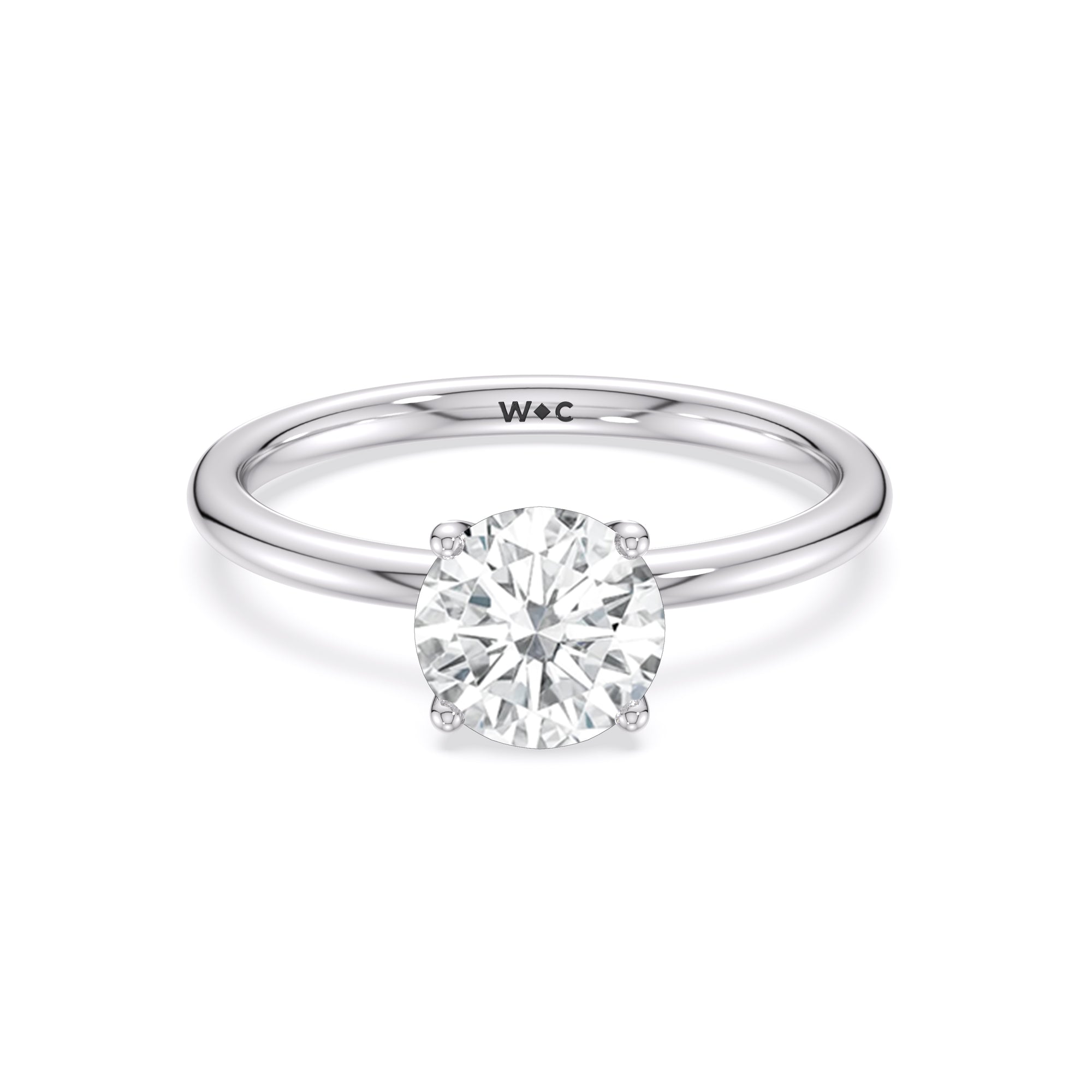
Classic Four Prong Petite Comfort Fit Solitaire Engagement Ring
With Clarity · $558
buyers assembling a ring around a specific cut-grade stone
What We Like
- A low-cost setting to pair with any of the graded stones above
- Price verified on the product page on 2026-09-05
Could Be Better
- Center stone purchased separately
Key Specs
A neutral, inexpensive setting so the cut-grade choice above drives the budget.
See price at With Clarity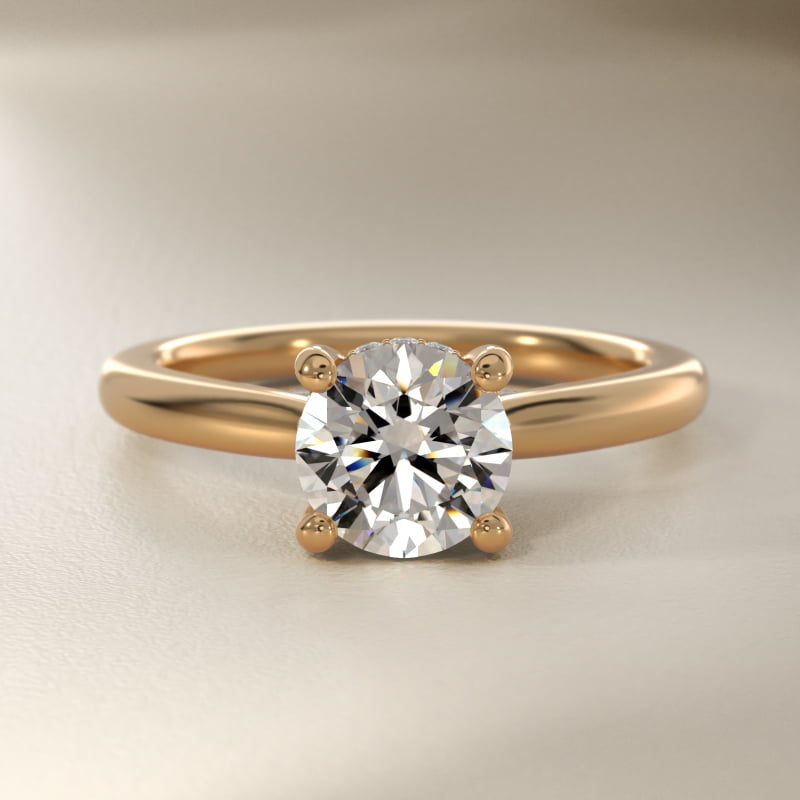
Product Comparison
| Product | Price | Rating | Reviews | Best For | Buy |
|---|---|---|---|---|---|
| GIA 1.02 Carat, I Color, SI1 Clarity, Excellent Cut Round Natural Diamond Blue Nile | $2,017 | 4.5 | — | isolating the price effect of cut grade alone | Blue Nile |
| GIA 1.02 Carat, I Color, SI1 Clarity, Very Good Cut Round Natural Diamond Blue Nile | $2,125 | 4.5 | — | comparing cut-grade pricing at identical specs | Blue Nile |
| 1.00 ct. Round Natural Diamond, F Color, VS2 Clarity, Super Ideal Cut Brilliant Earth | $3,090 | 4.5 | — | buyers who want a merchant's top marketed cut tier | Brilliant Earth |
| Classic Four Prong Petite Comfort Fit Solitaire Engagement Ring With Clarity | $558 | 4.5 | — | buyers assembling a ring around a specific cut-grade stone | With Clarity |
| Petite Hidden Halo Solitaire Plus Diamond Engagement Ring Blue Nile | $941 | 4.5 | — | buyers who want a hidden-halo look at any cut-grade budget | Blue Nile |
Get price-drop alerts and new guides from Carat Candor
One email a week: price drops on the gear we recommend, new guides, and what changed. No spam, unsubscribe anytime.